


Metal Mesh Pipe Filters: An Engineering Guide to Wire Mesh Filter Cylinders & Tubes
In industrial fluid processing, the integrity of downstream equipment and the purity of the final product depend heavily on the efficiency of primary and secondary filtration stages. Metal mesh pipe filters, specifically designed as Wire Mesh Filter Cylinders & Tubes, serve as critical components in capturing particulate matter while maintaining structural stability under varying pressures and temperatures. Unlike disposable polymer-based filters, these stainless steel components offer a combination of high mechanical strength, chemical resistance, and the ability to be cleaned and reused, making them a cornerstone of sustainable industrial engineering.
For engineers and procurement specialists, selecting the appropriate filtration medium requires a deep understanding of fluid dynamics, material science, and the specific constraints of the application environment. This guide explores the technical nuances of Wire Mesh Filter Cylinders & Tubes, providing the factual foundation necessary for informed decision-making in B2B industrial contexts.
Understanding the Role of Metal Mesh Pipe Filters
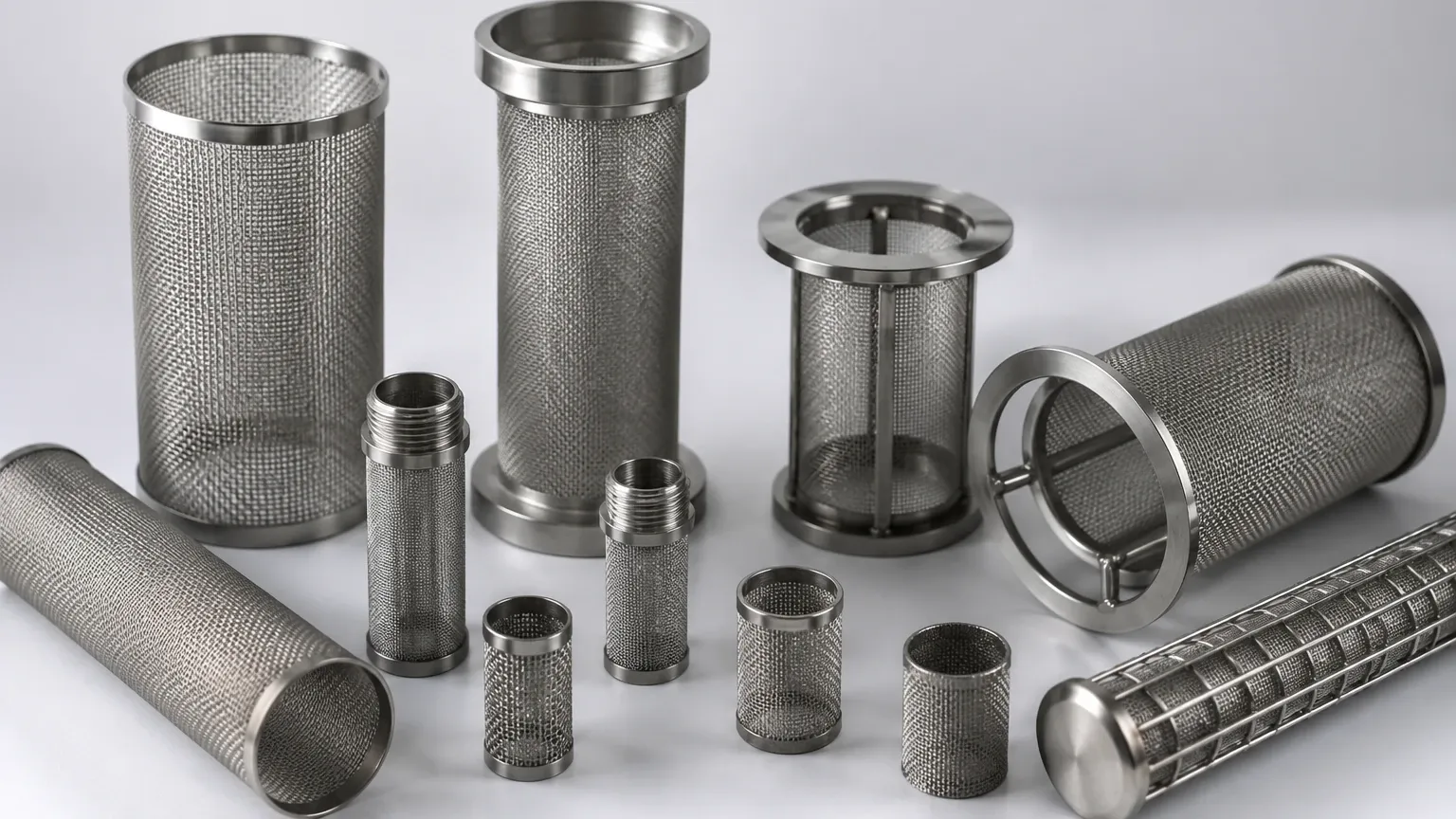
Metal mesh pipe filters are cylindrical filtration elements constructed from woven wire cloth, often reinforced with perforated metal or multiple layers of mesh. Their primary function is to remove solid contaminants from liquid or gas streams. In industries such as chemical processing, pharmaceuticals, and food and beverage, these filters are integrated directly into piping systems or housed within filter vessels to protect pumps, valves, and sensitive instrumentation.
The cylindrical geometry is not merely a matter of fit; it is an engineering choice that maximizes the effective filtration area (EFA) within a compact footprint. By utilizing a tube-like structure, manufacturers can achieve high flow rates with minimal pressure drop, which is essential for maintaining system efficiency. Furthermore, the inherent rigidity of a cylinder allows the filter to withstand significant differential pressures ($ΔP$) without deforming, especially when supported by an internal or external core.
Engineering Specifications of Wire Mesh Filter Cylinders & Tubes
When specifying Wire Mesh Filter Cylinders & Tubes, several technical parameters must be evaluated to ensure the component meets the operational demands of the site.
1. Mesh Weave Types and Filtration Characteristics
The performance of a metal mesh pipe filter is largely determined by the weave pattern of the wire cloth. Common weaves include:
* Plain Weave: The simplest pattern where wires cross over and under each other. It provides high flow rates and is easy to clean, typically used for coarse filtration.
* Twill Weave: Each shute wire passes successively over and under two warp wires. This allows for thicker wires and a heavier mesh, suitable for higher load applications.
* Dutch Weave (Plain and Twill): These weaves use different diameters for warp and shute wires, resulting in a much denser mesh with smaller, more tortuous paths. This is the standard for precision filtration where fine micron ratings are required.
2. Layer Configuration: Single vs. Multi-layer
For light-duty applications, a single layer of wire mesh may suffice. However, for most industrial B2B applications, multi-layer configurations are preferred. This often involves a fine filtration layer sandwiched between coarser support and drainage layers. In demanding environments, these layers are often sintered—a process of diffusion bonding that fuses the wires at every contact point—creating a monolithic structure that prevents media migration and ensures consistent pore size.
3. Structural Reinforcement
To prevent the collapse of the cylinder under high-pressure differentials, a perforated metal core is frequently used. This core provides the necessary mechanical backbone, allowing the fine wire mesh to focus solely on the filtration task. The choice of perforation pattern (round, square, or staggered) and the thickness of the core material are calculated based on the maximum expected $ΔP$ and the viscosity of the fluid.
Material Selection and Chemical Compatibility
The longevity of metal mesh pipe filters is dictated by their resistance to the process media. Stainless steel is the industry standard due to its versatility and durability.
* AISI 304: Suitable for general industrial use, offering good corrosion resistance in most atmospheric and water treatment applications.
* AISI 316/316L: The preferred choice for chemical processing and marine environments. The addition of molybdenum enhances resistance to pitting and crevice corrosion, particularly in chloride-rich environments. The "L" (low carbon) variant is essential for components that require welding, as it prevents carbide precipitation and ensures the integrity of the weld zones.
* Specialty Alloys: For extreme conditions involving high temperatures or highly aggressive acids, alloys such as Monel, Hastelloy, or Inconel may be utilized. These materials maintain their mechanical properties at temperatures where standard stainless steels would fail.
Performance Metrics: Micron Ratings and Pressure Drop
Engineers must balance filtration efficiency with the energy costs associated with pressure drop.
Absolute vs. Nominal Micron Ratings
* Nominal Rating: Refers to an approximate pore size where a certain percentage of particles (usually 60% to 90%) of a given size are retained. It is a useful metric for general screening but lacks the precision required for critical stages.
* Absolute Rating: Defines the size of the largest spherical particle that can pass through the filter under specific test conditions. For high-purity applications in pharmaceuticals or fine chemicals, absolute-rated Wire Mesh Filter Cylinders & Tubes are mandatory to ensure consistent output quality.
Pressure Drop ($ΔP$) Considerations
Every filter introduces resistance to flow. As contaminants accumulate on the surface of the metal mesh, the pressure drop increases. It is critical to design the system with a "clean" pressure drop that allows for a sufficient operational window before the "terminal" pressure drop is reached, signaling the need for cleaning or replacement. Factors influencing $ΔP$ include fluid viscosity, flow velocity, and the open area percentage of the mesh.
Customization and OEM Manufacturing Capabilities
Industrial filtration is rarely a one-size-fits-all solution. Customization is a core requirement for B2B procurement, as filters must often fit into legacy equipment or meet unique process requirements. Professional manufacturers like Kaifil specialize in providing tailored filtration components that address specific engineering challenges.
Customization options typically include:
* Dimensional Adjustments: Specific lengths, diameters, and wall thicknesses to fit existing housings.
* End Fitting Integration: Custom end caps, flanges, NPT/BSP threads, or quick-connect fittings (such as 222 or 226 O-ring configurations) to ensure a leak-proof seal.
* Surface Finishes: Electropolishing or passivating the stainless steel to meet the stringent hygienic standards of the food and pharmaceutical industries.
* Reinforcement Options: Adding external shrouds or internal skeletons for high-vibration or high-surge environments.
By working with an OEM manufacturer, engineers can ensure that the metal mesh pipe filters are optimized for the specific rheology of their process fluid, rather than settling for a standard catalog item that may underperform.
Installation and Maintenance for Long-Term Reliability
The total cost of ownership (TCO) for stainless steel Wire Mesh Filter Cylinders & Tubes is significantly lower than disposable alternatives when proper maintenance protocols are followed.
Installation Best Practices
Correct installation is vital to prevent bypass—where unfiltered fluid escapes around the edges of the filter. Ensuring that gaskets and O-rings are compatible with the process fluid and correctly seated is the first step. Furthermore, the orientation of the filter (inside-to-outside flow vs. outside-to-inside flow) must match the design of the filter element to ensure the support structure is utilized correctly.
Cleaning and Regeneration
One of the primary advantages of metal mesh pipe filters is their ability to be regenerated. Depending on the nature of the contaminant, cleaning methods include:
* Backwashing: Reversing the flow of the fluid to dislodge particles from the mesh surface.
* Ultrasonic Cleaning: Using high-frequency sound waves in a cleaning solvent to remove fine particles trapped deep within the mesh pores.
* Chemical Cleaning: Using acids, bases, or specialized detergents to dissolve organic or inorganic scaling.
* Burn-off/Pyrolysis: For polymer or organic buildup, controlled heating can be used to carbonize and remove the contaminants.
Regular inspection of the mesh for signs of mechanical wear, such as "blinded" areas (permanently clogged pores) or wire breakage, is essential. While stainless steel is highly durable, the fatigue caused by constant pressure cycling can eventually lead to material failure.
Applications Across Key Industrial Sectors
Wire Mesh Filter Cylinders & Tubes are deployed across a vast array of sectors, each with its own set of technical requirements:
* Chemical and Petrochemical: Used for catalyst recovery, monomer filtration, and protecting high-pressure injection pumps. The chemical resistance of 316L stainless steel is paramount here.
* Food and Beverage: Employed in the filtration of syrups, beverages, and edible oils. These filters must comply with FDA standards and often require high-polish finishes to prevent bacterial growth.
* Water Treatment: Used in pre-filtration for Reverse Osmosis (RO) systems and as intake screens to protect pumps from debris in raw water sources.
* Hydraulic Systems: Metal mesh pipe filters serve as suction strainers or return line filters, removing wear particles from hydraulic oils to prevent component failure in heavy machinery.
Conclusion
Selecting the right metal mesh pipe filters involves a comprehensive evaluation of material properties, weave structures, and operational parameters. For industrial engineers, the shift toward stainless steel Wire Mesh Filter Cylinders & Tubes represents a commitment to precision and durability. By understanding the factual boundaries of these components—from micron ratings to chemical compatibility—purchasing teams can secure filtration solutions that enhance process stability and reduce long-term operational costs.
As a specialist manufacturer, Kaifil provides the technical expertise and manufacturing precision required to produce high-performance filtration components. Whether for standard applications or complex OEM requirements, ensuring the right fit between the filter and the process is the key to achieving optimal industrial performance.
