


Engineering Guide to Steel Mesh Pipe Filter Systems and Applications
In industrial fluid dynamics, the precision and reliability of filtration components directly impact the operational lifespan of downstream equipment such as pumps, valves, and high-pressure nozzles. A steel mesh pipe filter—often referred to as a filter cylinder or tube—is a fundamental component used to remove particulate matter from liquid and gaseous streams. These components are engineered to withstand significant mechanical stress while maintaining precise micron ratings, making them indispensable in sectors ranging from chemical processing to hydraulic power systems.
Selecting the appropriate Wire Mesh Filter Cylinders & Tubes requires a deep understanding of material properties, weave patterns, and structural design. This guide provides a technical overview of the engineering considerations involved in specifying and utilizing stainless steel mesh pipe filters in industrial environments.
1. Material Selection and Chemical Compatibility
The performance of a steel mesh pipe filter begins with metallurgy. Most industrial applications demand stainless steel due to its inherent resistance to corrosion, oxidation, and high temperatures.
Stainless Steel Grades
* AISI 304: The standard grade for general-purpose filtration. It offers good corrosion resistance and is suitable for most water treatment and food-grade applications where extreme chemical exposure is not a factor.
* AISI 316/316L: Contains molybdenum, which significantly enhances resistance to chlorides and pitting. This grade is the preferred choice for marine environments, pharmaceutical manufacturing, and chemical processing where acidic or alkaline fluids are common.
* Specialty Alloys: For extreme environments, materials such as Monel, Inconel, or Hastelloy may be utilized to provide resistance to high-temperature oxidation or highly aggressive chemical agents.
Choosing the correct grade is essential for the Total Cost of Ownership (TCO). While 316L has a higher initial cost, its longevity in corrosive environments prevents frequent replacement cycles and unplanned downtime.
2. Understanding Wire Mesh Weave Patterns
The "pipe" or "tube" structure of the filter is typically formed from woven wire mesh. The method of weaving determines the filter's pore size, flow capacity, and mechanical strength.
Plain Weave
The most common weave where each warp wire crosses over and under each shute wire. It provides a high percentage of open area and low pressure drop, making it ideal for high-flow applications with relatively large particulate loads.
Twill Weave
Each shute wire passes over and under two warp wires. This allows for the use of heavier wires for a given mesh count, resulting in a more robust mesh that can handle higher pressures than plain weave of the same micron rating.
Dutch Weave (Plain and Twill)
Dutch weaves utilize a larger diameter warp wire and a smaller diameter shute wire. This creates a dense, strong mesh with very fine openings. Dutch weave is the standard for high-pressure filtration and applications requiring precise absolute filtration ratings. The "Twill Dutch" variant allows for the finest filtration levels, often reaching down to 5-10 microns in a single layer.
3. Structural Design of Wire Mesh Filter Cylinders & Tubes
A steel mesh pipe filter must maintain its shape under the force of fluid flow. Depending on the application, the construction may vary from a simple single-layer mesh to a complex multi-stage assembly.
Single-Layer vs. Multi-Layer Construction
* Single-Layer: Suitable for low-pressure applications or where the mesh itself is thick enough to be self-supporting. These are often used as suction strainers.
* Multi-Layer (Sintered or Bonded): Multiple layers of mesh are combined to provide a balance of filtration precision and structural support. Often, a fine filtration layer is sandwiched between coarser protective layers.
Support Cores and Outer Guards
In high-differential pressure environments, the wire mesh is typically wrapped around a perforated metal core. This core provides the necessary hoop strength to prevent the mesh from collapsing. In some cases, an outer perforated guard is also added to protect the mesh from external impact or to facilitate backwashing cycles.
Seam Integrity
The longitudinal seam of a filter tube is a critical point of potential failure. High-quality industrial filters utilize plasma welding or TIG (Tungsten Inert Gas) welding to ensure a continuous, leak-proof bond that matches the strength of the parent material. This eliminates the risk of "bypass," where unfiltered fluid escapes through gaps in the seam.
4. Engineering Parameters: Flow Rate and Pressure Drop
When specifying a steel mesh pipe filter, engineers must calculate the balance between filtration efficiency and the energy required to move fluid through the system.
Effective Filtration Area (EFA)
The EFA is the total surface area of the mesh available for fluid passage, minus the area blocked by support structures or end caps. Maximizing the EFA reduces the face velocity of the fluid, which in turn lowers the initial pressure drop ($ΔP$) and extends the time between cleaning cycles.
Micron Rating: Absolute vs. Nominal
* Nominal Rating: An approximate value indicating the ability of the filter to retain the majority of particles of a specific size (e.g., 90% of 20-micron particles).
* Absolute Rating: The diameter of the largest hard spherical particle that will pass through the filter under specified test conditions. For critical pharmaceutical or hydraulic applications, absolute ratings are mandatory to ensure system protection.
Viscosity and Temperature
The viscosity of the fluid significantly impacts the pressure drop. High-viscosity fluids (like heavy oils or syrups) require larger surface areas or coarser mesh to maintain acceptable flow rates. Additionally, as temperatures rise, the mechanical strength of the stainless steel may decrease, requiring a derating of the maximum allowable working pressure.
5. Customization and End-Fitting Configurations
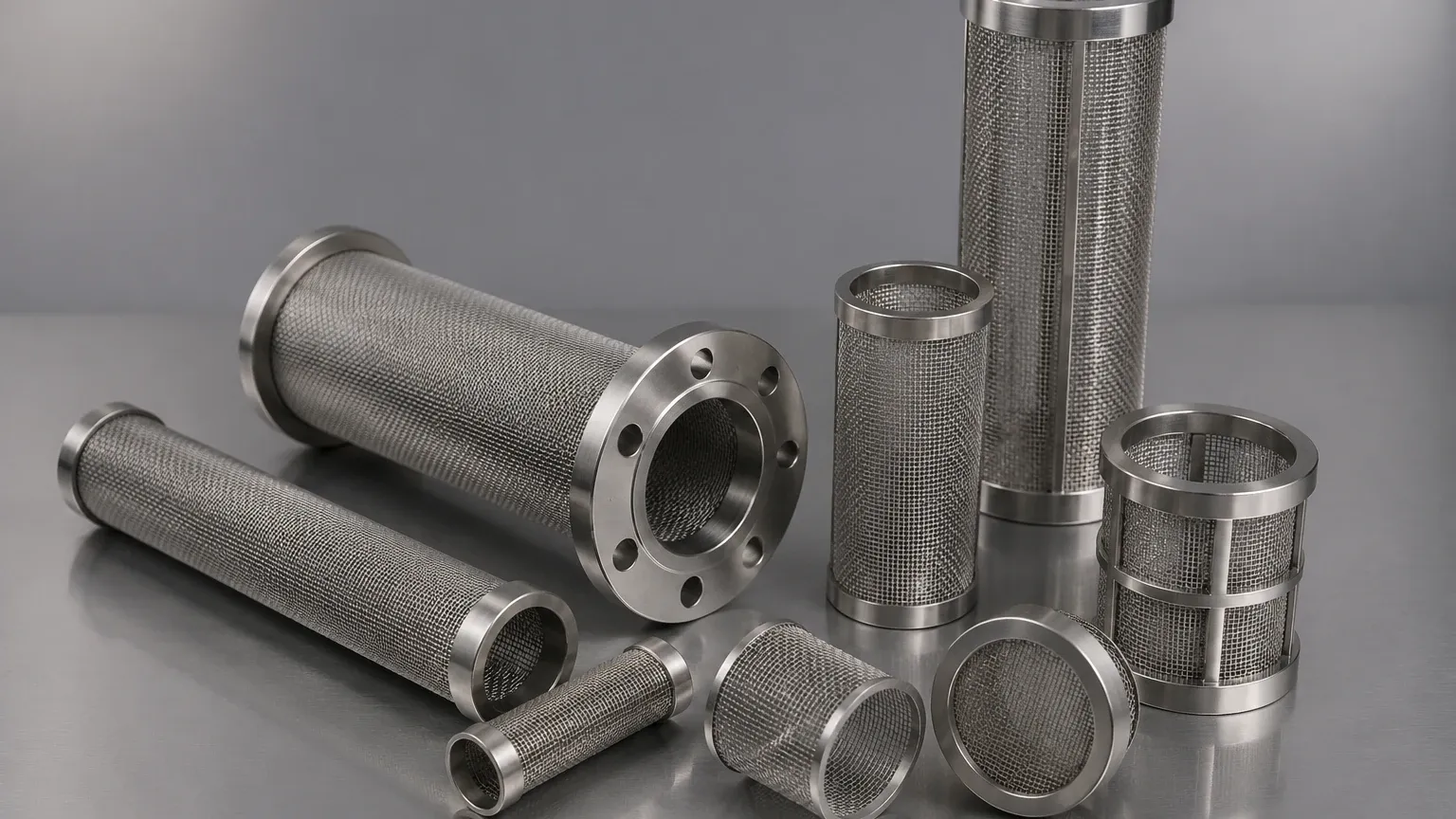
Industrial systems rarely use "one-size-fits-all" components. Customization of the steel mesh pipe filter ensures seamless integration into existing pipelines. Common end-fitting configurations include:
* DOE (Double Open End): The tube is open at both ends, typically requiring gaskets or seals at each end within a housing.
* SOE (Single Open End): One end is capped (blind), and the other is open. This is common in "plug-in" style filter housings.
* Threaded Connections: NPT or BSP threads can be welded directly to the filter tube for secure, leak-proof installation in high-vibration environments.
* Flanged Ends: Used for large-diameter pipes where the filter must be bolted into the process line.
6. Maintenance, Cleaning, and Service Life
One of the primary advantages of a stainless steel mesh pipe filter over disposable synthetic filters is that it is cleanable and reusable. This significantly reduces long-term operational costs and environmental waste.
Cleaning Methods
1. Backwashing: Reversing the flow of fluid through the filter to dislodge particles trapped on the surface. This is effective for surface-loading mesh like plain weave.
2. Ultrasonic Cleaning: Utilizing high-frequency sound waves in a cleaning solvent to break down fine particles trapped deep within the mesh pores. This is the preferred method for Dutch weave and sintered mesh.
3. Chemical Cleaning: Using acids or alkalis to dissolve organic or mineral scaling. The chemical compatibility of the filter material (e.g., 316L) must be verified against the cleaning agent.
Replacement Indicators
The primary indicator for maintenance is the differential pressure across the filter. Once the $ΔP$ reaches a pre-determined limit (the "terminal pressure drop"), the filter must be cleaned. If the mesh shows signs of deformation, wire breakage, or permanent clogging that cannot be removed by cleaning, the component must be replaced to prevent downstream contamination.
7. Application-Specific Considerations
Chemical and Petrochemical
In these sectors, the focus is on corrosion resistance and high-temperature stability. Filters are often used to protect catalysts or to remove carbon fines from process streams.
Food and Beverage
Filtration components must meet stringent hygienic standards. This involves ensuring that the filter has no "dead zones" where bacteria can grow and that all welds are smooth and polished. Stainless steel 316L is the industry standard here.
Hydraulic Systems
Hydraulic filters must handle high-pressure pulses and protect sensitive servo-valves. The structural integrity of the filter tube is paramount to prevent "media migration," where fragments of the filter itself enter the fluid stream.
8. Procurement Checklist for International Buyers
When sourcing Wire Mesh Filter Cylinders & Tubes for industrial projects, purchasing teams should confirm the following technical details with the manufacturer:
* Material Certification: Request mill test reports (MTRs) to verify the grade of stainless steel.
* Dimensional Tolerances: Confirm the outer diameter (OD), inner diameter (ID), and overall length (OAL) to ensure fitment within housings.
* Pressure Rating: Define the maximum operating pressure and the maximum allowable differential pressure.
* Filtration Efficiency: Specify whether the micron rating is nominal or absolute.
* Compliance: Ensure the products meet relevant industry standards such as ISO 9001 for manufacturing quality or FDA/3-A for food-grade applications.
Conclusion
The steel mesh pipe filter is a critical engineering tool that balances filtration precision with mechanical durability. By selecting the correct material, weave pattern, and structural reinforcement, engineers can optimize fluid systems for efficiency and longevity. Whether used in simple water strainers or complex chemical reactors, these stainless steel components provide a sustainable and reliable solution for modern industrial filtration challenges. For specialized requirements, working with a manufacturer capable of providing custom OEM designs ensures that the filtration component is perfectly matched to the specific demands of the application environment.
