


Engineering Guide to Steel Wire Mesh Filter Solutions for Industrial Applications
In industrial process engineering, the efficiency of a filtration system directly impacts the longevity of downstream equipment, the purity of the final product, and the overall cost of operations. Among the various media available, the steel wire mesh filter remains a preferred choice for demanding environments due to its mechanical strength, thermal stability, and precise pore geometry.
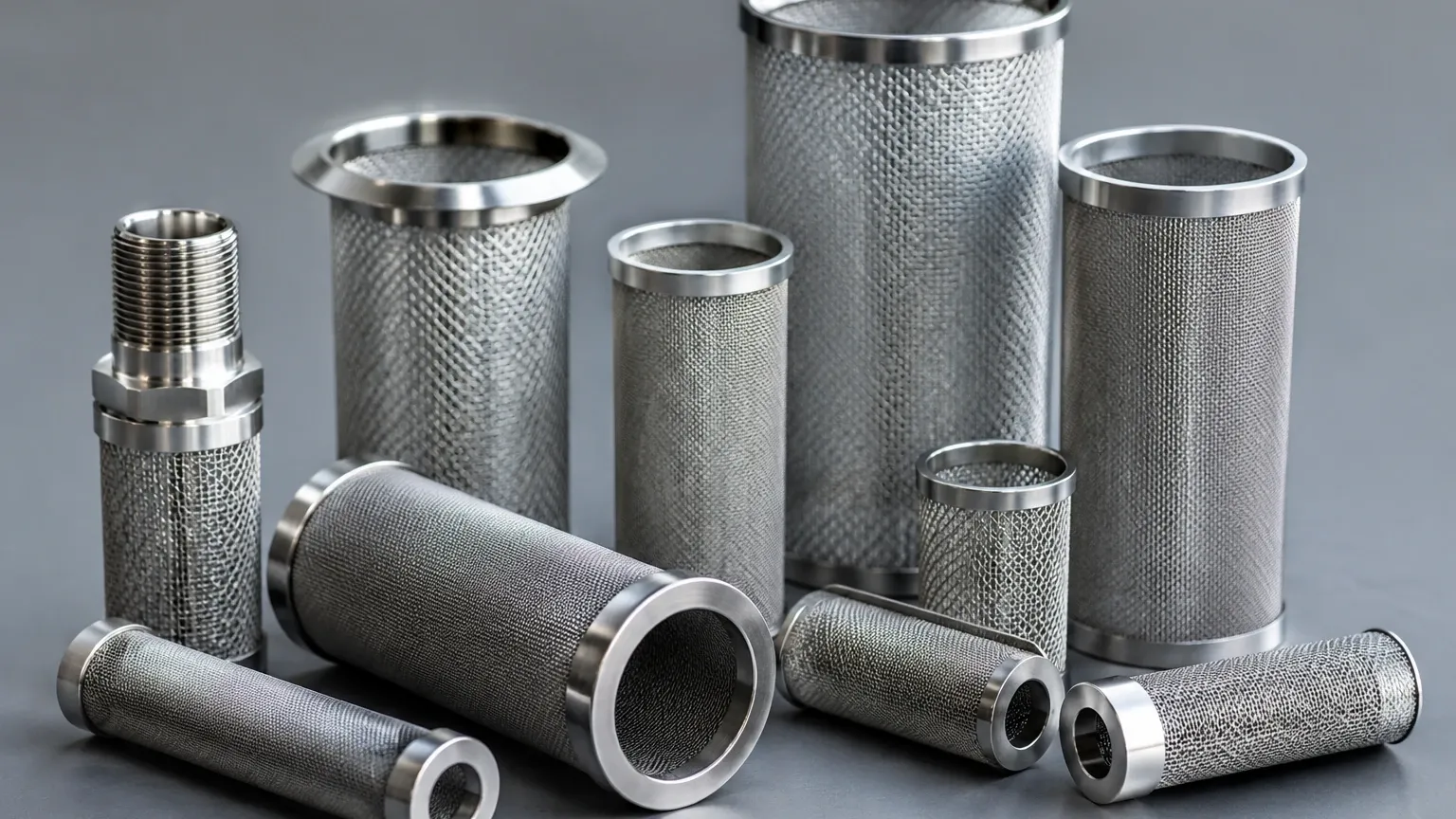
When designing or procuring filtration components, engineers often specify Wire Mesh Filter Cylinders & Tubes because these geometries offer the best balance of surface area, structural integrity, and ease of integration into existing piping systems. This guide explores the technical considerations, material selection, and engineering principles necessary to optimize the performance of stainless steel filtration components.
1. Operating Principles of Wire Mesh Filtration
The primary function of a steel wire mesh filter is mechanical sieving. Unlike depth filters (such as felt or melt-blown cartridges) that trap particles within a thick matrix, wire mesh primarily performs surface filtration. Particles larger than the mesh aperture are retained on the upstream surface, forming a filter cake that can, in some instances, improve filtration efficiency at the cost of increased pressure drop.
Pore Geometry and Weave Types
The performance of a filter cylinder is determined by its weave pattern. Common industrial weaves include:
* Plain Weave: The simplest pattern where wires cross over and under each other. It provides high flow rates but is limited in its ability to achieve very fine micron ratings.
* Twill Weave: Each shute wire passes successively over and under two warp wires. This allows for heavier wire diameters and finer meshes, increasing the mechanical strength of the filter tube.
* Dutch Weave (Plain and Twill): These weaves utilize different wire diameters for warp and shute, resulting in a dense, firm mesh with small, triangular openings. Dutch weaves are essential for high-pressure applications and precision filtration down to the 5-20 micron range.
2. Structural Design of Wire Mesh Filter Cylinders & Tubes
For industrial applications, the mesh must be formed into a stable geometric shape. Wire Mesh Filter Cylinders & Tubes are engineered to withstand differential pressures that would otherwise deform a flat mesh sheet.
Single-Layer vs. Multi-Layer Construction
In low-pressure or coarse filtration applications, a single layer of stainless steel mesh may suffice. However, for high-precision or high-pressure environments, multi-layer sintered or reinforced structures are used. These often consist of:
1. Filtration Layer: The fine mesh that determines the micron rating.
2. Support Layer: A coarser, heavier mesh or a perforated metal core that provides structural rigidity.
3. Drainage Layer: Ensures uniform fluid distribution across the filtration surface.
Pleated vs. Cylindrical Designs
While standard cylindrical tubes are easier to clean, pleated wire mesh filters significantly increase the available surface area within the same footprint. This reduces the flux (flow per unit area), leading to lower pressure drops and longer intervals between cleaning cycles. Engineers must weigh the benefits of increased surface area against the higher complexity of cleaning pleated structures.
3. Material Selection: Metallurgy and Compatibility
The choice of alloy for a steel wire mesh filter is dictated by the chemical composition of the process fluid and the operating temperature. Stainless steel is the industry standard due to its corrosion resistance and durability.
Grade 304 Stainless Steel
Suitable for general industrial use, Grade 304 offers good resistance to atmospheric corrosion and many organic and inorganic chemicals. It is frequently used in water treatment and food processing where the environment is not excessively acidic or saline.
Grade 316L Stainless Steel
For chemical processing, pharmaceutical manufacturing, and marine environments, Grade 316L is the preferred material. The addition of molybdenum provides superior resistance to pitting and crevice corrosion in chloride-rich environments. The "L" (low carbon) designation is critical for welded filter components, as it prevents carbide precipitation during the welding process, maintaining the corrosion resistance of the seams.
High-Temperature Considerations
Stainless steel wire mesh maintains its structural integrity at temperatures exceeding 400°C (752°F), far surpassing the limits of polymer-based filters. This makes it indispensable for steam filtration, hot oil systems, and polymer melt applications.
4. Selection Criteria for Industrial Level Measurement and Filtration
When selecting Wire Mesh Filter Cylinders & Tubes, international buyers and engineers must confirm several technical parameters to ensure the component is fit for purpose.
Micron Rating: Absolute vs. Nominal
* Nominal Rating: Indicates the ability of the filter to retain a majority of particles of a specific size (usually 60-80%).
* Absolute Rating: Refers to the diameter of the largest hard spherical particle that will pass through the filter under specified test conditions. In critical pharmaceutical or hydraulic applications, absolute ratings are mandatory to prevent downstream contamination.
Pressure Drop (ΔP) and Flow Rate
An undersized filter will result in a high initial pressure drop, reducing the system's energy efficiency and shortening the service life of the filter. Engineers should calculate the clean pressure drop based on fluid viscosity, flow velocity, and the open area percentage of the mesh.
End Cap and Connection Configurations
To integrate a filter tube into a housing, the end-fitting design is vital. Options include:
* DOE (Double Open End): Requires gaskets at both ends for sealing.
* SOE (Single Open End): Often features a threaded connection (NPT/BSP) or an O-ring plug (e.g., 222 or 226 fittings) to ensure a bypass-free seal.
* Flanged Ends: Used in large-scale industrial pipelines for secure, bolt-on installation.
5. Installation, Maintenance, and Application Risks
Proper installation and a defined maintenance schedule are essential for the longevity of a steel wire mesh filter. Unlike disposable cartridges, stainless steel filters are designed for reuse, which significantly lowers the total cost of ownership (TCO).
Cleaning Methods
One of the primary advantages of wire mesh is its cleanability. Common methods include:
* Backwashing: Reversing the flow of the fluid to dislodge particles from the surface.
* Ultrasonic Cleaning: Using high-frequency sound waves in a cleaning solvent to remove fine particles trapped within the mesh interstices.
* Chemical Cleaning: Utilizing acids or alkalis to dissolve organic or inorganic scaling, provided the chemical is compatible with the stainless steel grade.
Application Risks: Fatigue and Bypass
Engineers must be aware of potential failure modes. Mechanical fatigue can occur if the filter is subjected to frequent pressure pulsations, leading to wire breakage. Furthermore, improper sealing at the end caps can lead to "bypass," where unfiltered fluid bypasses the mesh entirely, potentially damaging sensitive downstream components like high-pressure pumps or spray nozzles.
6. Information for International Buyers
When sourcing custom filtration solutions, providing comprehensive data to the manufacturer reduces lead times and ensures performance. A technical inquiry should include:
1. Fluid Characteristics: Viscosity, temperature, and chemical pH.
2. Contaminant Profile: Particle size distribution and concentration (ppm).
3. Operating Pressure: Maximum system pressure and allowable pressure drop.
4. Dimensional Constraints: Overall length, outer diameter (OD), and inner diameter (ID).
5. Certification Requirements: Material Test Reports (MTRs), FDA compliance for food/beverage, or ISO 9001 quality standards.
Conclusion
The implementation of high-quality Wire Mesh Filter Cylinders & Tubes is a strategic investment in process reliability. By understanding the nuances of weave patterns, material grades, and structural design, engineering teams can specify filtration components that offer precise performance and long-term durability. Whether for chemical processing, hydraulic systems, or water treatment, the steel wire mesh filter remains an essential tool for achieving efficient and cost-effective industrial filtration.
For those seeking specialized designs, working with a manufacturer that offers OEM capabilities ensures that the filtration solution is tailored to the specific mechanical and chemical demands of the application, ultimately optimizing the lifecycle of the entire industrial system.
