


Engineering Guide to Wire Mesh Cone Filters in Industrial Systems
In industrial fluid handling and processing, the protection of downstream equipment—such as pumps, valves, and instrumentation—is a critical engineering priority. Among the various geometries used for mechanical separation, the wire mesh cone filter remains a staple due to its high surface area and structural versatility. Often categorized alongside Wire Mesh Filter Cylinders & Tubes, cone filters are specifically engineered to handle high-velocity flows and significant particulate loads during both system commissioning and continuous operation.
Selecting the correct wire mesh cone filter requires an understanding of fluid dynamics, material science, and mechanical stress. This guide provides a technical overview of cone filter design, material selection, and the performance variables that engineers must consider to ensure system reliability.
1. Design Fundamentals of Wire Mesh Cone Filters
The wire mesh cone filter, often referred to in the industry as a "witch’s hat" or "top hat" strainer depending on its flange configuration, is a conical filtration element designed to be inserted between two pipe flanges. Its primary function is to capture solid contaminants from a liquid or gas stream.
Geometry and Flow Dynamics
The conical shape is not merely an aesthetic choice; it is a functional design that increases the available filtration surface area compared to a flat disc or a simple cylinder of the same diameter. This increased surface area results in a lower initial pressure drop (Delta P) across the filter.
There are two primary flow configurations for cone filters:
* Inside-Out Flow: Contaminants are collected on the interior of the cone. This is common in "witch's hat" designs used during system start-up, where the debris is easily removed along with the filter.
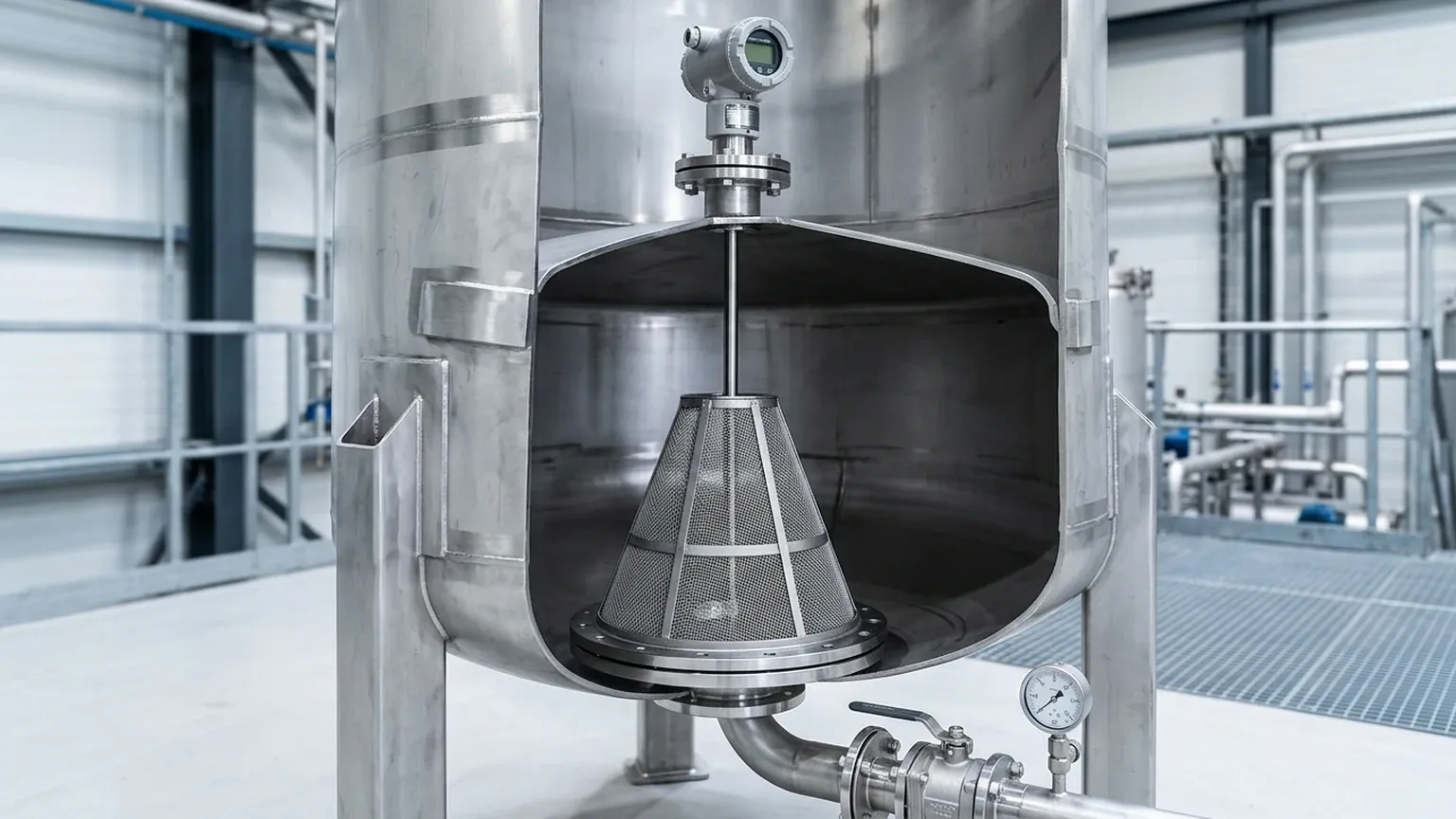
* Outside-In Flow: The fluid passes from the exterior to the interior. This configuration is often used in permanent installations where the filter is housed within a larger vessel or strainer body, allowing for backwashing or external cleaning.
Structural Reinforcement
Because cone filters are often subjected to high differential pressures—especially when they become partially blinded by debris—structural integrity is paramount. A standard wire mesh cone filter may consist of a single layer of stainless steel wire cloth for light-duty applications. However, for industrial-grade performance, the mesh is typically supported by a perforated metal core or an external cage. This reinforcement prevents the mesh from collapsing or "telescoping" under the force of the fluid flow.
2. Material Selection and Chemical Compatibility
Industrial filtration environments vary from cryogenic temperatures to high-heat chemical processing. The choice of material for both the mesh and the support structure dictates the filter's lifespan and resistance to corrosion.
Stainless Steel Grades
* Type 304 Stainless Steel: The most common material for general industrial use. It offers excellent strength and basic corrosion resistance suitable for water treatment and non-acidic chemical applications.
* Type 316L Stainless Steel: Specified for more aggressive environments. The addition of molybdenum provides superior resistance to chlorides and pitting, making it the standard for pharmaceutical, food and beverage, and marine applications.
* Specialty Alloys: In highly corrosive or high-temperature environments, materials such as Hastelloy, Monel, or Inconel may be utilized. These are typically reserved for specialized chemical processing where standard stainless steels would fail prematurely.
Mesh Weave Types
The performance of the filter is also influenced by the weave of the wire mesh. Plain square weaves provide high open areas and are easy to clean, while Dutch weaves (plain or twilled) offer much finer filtration ratings and higher mechanical strength by packing more wires into a given area. For precision applications, sintered wire mesh—where multiple layers are heat-bonded—provides the ultimate in pore stability and structural rigidity.
3. Calculating Filtration Performance and Pressure Drop
For an engineer, the most critical data points for a wire mesh cone filter are the micron rating and the impact on system pressure.
Effective Filtration Area (EFA)
The EFA is the total area of the mesh minus the area blocked by the support structure (perforated metal) and the flange welds. A common mistake in procurement is assuming the total surface area of the cone is available for filtration. High-quality manufacturers provide the "percent open area" calculation, which helps engineers predict how quickly the filter will reach its terminal pressure drop.
Pressure Drop (ΔP) Considerations
Every filter introduces a restriction to the flow. The pressure drop is a function of:
1. Fluid Viscosity: Thicker fluids require more pressure to pass through the same mesh opening.
2. Flow Velocity: As velocity increases, ΔP increases exponentially.
3. Contaminant Loading: As the mesh pores fill with solids, the velocity through the remaining open pores increases, leading to a rapid rise in pressure.
In start-up applications, it is standard practice to design for a 100% to 300% "open area ratio" relative to the cross-sectional area of the pipe. A 200% ratio means the open area of the mesh is twice the area of the pipe's interior, providing a safety buffer as the filter begins to collect debris.
4. Applications: From Start-up to Permanent Protection
While Wire Mesh Filter Cylinders & Tubes are often integrated into complex machinery, cone filters are frequently used as standalone protection units in piping systems.
Commissioning and Start-up
During the construction of new industrial plants, debris such as welding slag, scale, and tools can be left inside the piping. Temporary wire mesh cone filters are installed upstream of sensitive equipment during the initial flushing phase. Once the system is clean, these filters are often removed or replaced with lower-micron permanent elements.
Pump and Valve Protection
In hydraulic systems and chemical transfer lines, a cone filter acts as a last line of defense. By capturing large particulates that could score a valve seat or damage a pump impeller, the filter prevents catastrophic equipment failure and reduces unplanned downtime.
Steam and Gas Filtration
Cone filters are also employed in high-velocity steam lines to remove pipe scale. Because steam travels at high speeds, the aerodynamic profile of the cone helps minimize turbulence compared to flat-plate strainers, reducing the risk of vibration-induced fatigue in the mesh.
5. Installation, Maintenance, and Replacement Cycles
Correct installation is essential to the longevity of a wire mesh cone filter. If a filter is installed backwards (flow hitting the unsupported side of the mesh), the mesh can tear away from the flange, sending both the contaminants and the filter fragments downstream.
Installation Best Practices
* Gasket Integrity: Ensure that the gaskets used on either side of the filter flange are compatible with the process fluid and rated for the system pressure.
* Orientation: For horizontal lines, the cone should be oriented to allow for proper drainage. In vertical lines, the flow direction (up or down) must be matched to the cone's structural reinforcement.
* Monitoring: Differential pressure gauges should be installed upstream and downstream of the filter. This allows operators to monitor the "health" of the filter in real-time.
Cleaning Protocols
Unlike disposable synthetic filters, stainless steel wire mesh cone filters are cleanable and reusable. Common cleaning methods include:
* Ultrasonic Cleaning: High-frequency sound waves create cavitation bubbles that dislodge fine particles from deep within the mesh weave.
* Backwashing: Reversing the flow of clean fluid through the filter to push contaminants off the surface.
* Chemical Cleaning: Using solvents or acids to dissolve organic or mineral build-up, provided the chemicals are compatible with the stainless steel grade.
6. Technical Specifications for Procurement
When sourcing a wire mesh cone filter for an industrial project, providing vague specifications can lead to performance issues. International buyers and engineers should confirm the following parameters with the manufacturer:
1. Micron Rating (Absolute vs. Nominal): Define exactly what size particle needs to be retained. Absolute ratings signify that 100% of particles above that size will be captured, whereas nominal ratings are an average.
2. Maximum Differential Pressure (Burst Pressure): What is the maximum pressure the cone can withstand before the mesh or support structure deforms?
3. Flange Standard: Specify the flange type (e.g., ANSI, DIN, JIS) and the face finish (e.g., Raised Face, Flat Face, or Ring Type Joint).
4. Length-to-Diameter Ratio: A longer cone provides more surface area but requires more space in the piping spool. Standard lengths are often 100%, 150%, or 200% of the pipe diameter.
Conclusion
The wire mesh cone filter is a critical component in the maintenance of industrial fluid system integrity. By balancing the requirements of filtration fineness, structural strength, and pressure management, engineers can protect high-value downstream assets and optimize process efficiency. Whether used as a temporary start-up strainer or a permanent filtration solution, the performance of these components relies on precision manufacturing and rigorous material selection. For applications requiring specialized geometries, integrating cone designs with Wire Mesh Filter Cylinders & Tubes provides a comprehensive approach to mechanical separation in demanding B2B industrial environments.
