


Engineering Guide to Wire Mesh Duct Filters: Performance, Selection, and Industrial Application
In industrial process environments, air and gas streams often carry particulate matter that can damage downstream equipment, contaminate products, or compromise environmental compliance. The wire mesh duct filter serves as a critical line of defense within ventilation systems, exhaust stacks, and process piping. Unlike standard HVAC filters, industrial duct filters must withstand high velocities, corrosive vapors, and extreme temperature fluctuations while maintaining precise filtration efficiency.
Selecting the correct filtration medium requires a deep understanding of fluid dynamics and material science. For many high-performance applications, Wire Mesh Filter Cylinders & Tubes provide the structural integrity and customizable micron ratings necessary to ensure long-term operational stability. This guide explores the technical considerations, material requirements, and engineering parameters essential for integrating wire mesh filtration into industrial ductwork.
1. Operating Principles of Wire Mesh Duct Filtration
A wire mesh duct filter operates primarily through mechanical straining, interception, and inertial impaction. As the gas or air stream passes through the precision-woven stainless steel mesh, particles larger than the pore size are physically blocked. However, for industrial-grade filtration, the process is more nuanced:
* Inertial Impaction: Larger particles with high momentum cannot follow the fluid streamlines as they curve around the wires. These particles strike the wire surface and are captured.
* Interception: Smaller particles that follow the streamlines come within one particle radius of a wire and are caught by the mesh surface.
* Diffusion: For extremely fine particles (typically sub-micron), Brownian motion causes them to deviate from streamlines, increasing the probability of contact with the filter media.
In a duct environment, the filter must manage these mechanisms while minimizing "pressure drop" (delta P). A high pressure drop indicates excessive resistance, which forces fans and blowers to work harder, increasing energy consumption and potentially leading to system failure. Engineering a wire mesh duct filter involves balancing the mesh density (micron rating) with the open area to optimize flow rates.
2. Material Selection and Structural Integrity
Industrial ducts are rarely benign environments. They often transport humid air, chemical byproducts, or high-temperature exhaust. Therefore, the material composition of the filter is as important as its filtration rating.
Stainless Steel Alloys
Stainless steel is the industry standard for wire mesh duct filters due to its mechanical strength and resistance to oxidation.
* AISI 304: Suitable for general industrial use where basic corrosion resistance is required.
* AISI 316/316L: Contains molybdenum, providing superior resistance to chlorides and acidic environments, making it ideal for chemical processing and pharmaceutical ducts.
* High-Temperature Alloys: For exhaust systems exceeding 500°C, specialized alloys like Inconel or Hastelloy may be utilized to prevent thermal degradation and scaling.
Weave Types
The geometry of the weave determines the filter’s performance characteristics.
* Plain Weave: Offers a high open area and low pressure drop, suitable for coarse filtration and high-velocity air streams.
* Dutch Weave: Provides a denser structure with higher mechanical strength and finer filtration capabilities, often used in high-pressure gas lines.
* Twilled Weave: Allows for thicker wires and finer mesh counts, providing a balance between durability and precision.
3. Engineering Parameters for Duct Integration
When specifying a wire mesh duct filter, engineers must calculate several variables to ensure the component does not become a bottleneck in the system.
Effective Filtration Area (EFA)
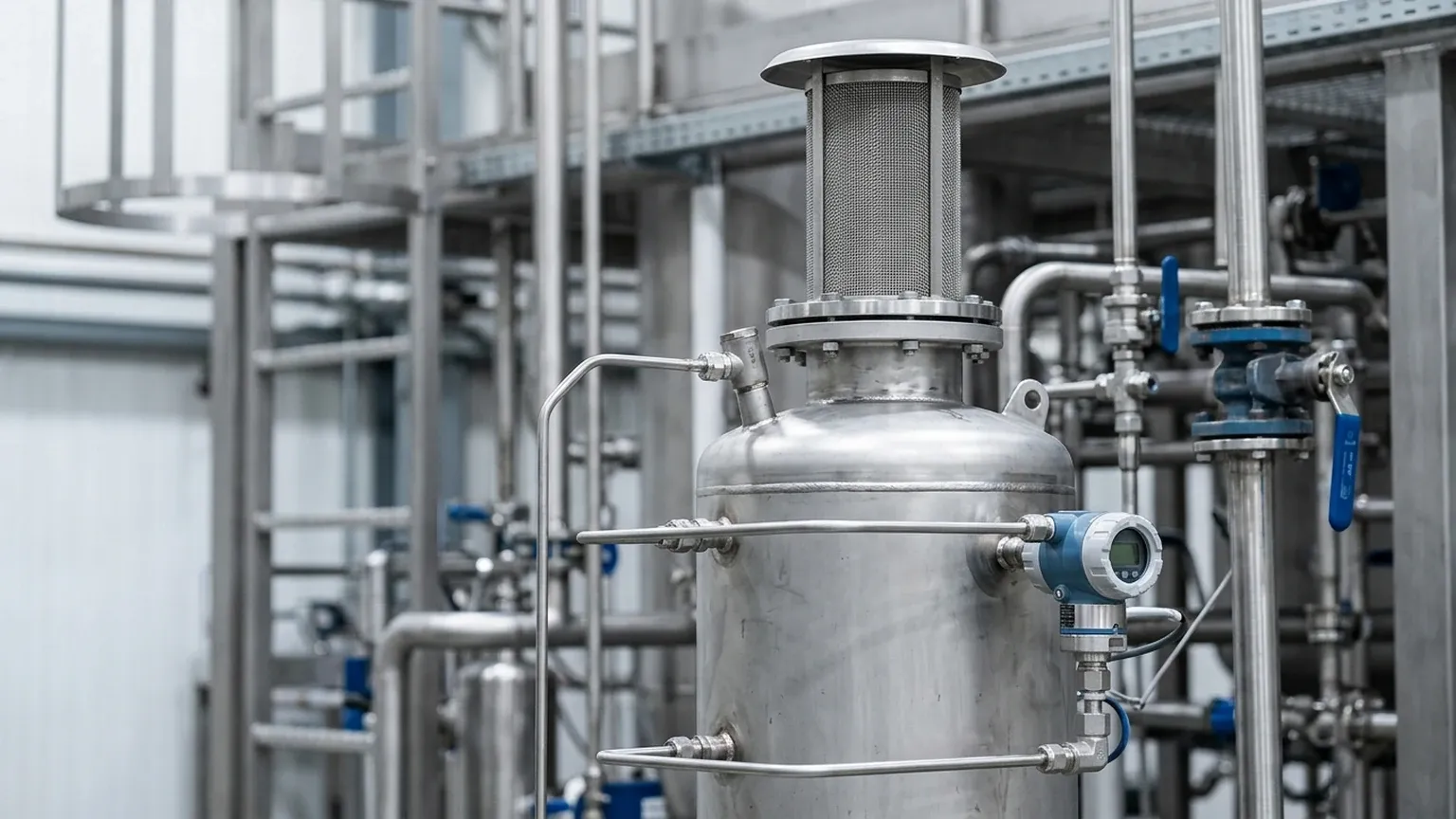
The EFA is the total surface area available for the gas stream to pass through. In constrained duct spaces, a flat mesh panel may not provide enough EFA, leading to rapid clogging. To solve this, filters are often designed as cylinders or pleated tubes. By using Wire Mesh Filter Cylinders & Tubes, the surface area can be significantly increased within the same duct diameter, extending the service life between cleanings.
Face Velocity vs. Through-Mesh Velocity
Face velocity is the speed of the air as it approaches the filter assembly, while through-mesh velocity is the speed as it passes through the actual pores. If the through-mesh velocity is too high, it can cause "particle migration," where captured contaminants are forced through the mesh by the sheer pressure of the flow. Proper engineering ensures the velocity remains within limits that maintain capture efficiency.
Structural Reinforcement
In high-flow ducting, the wire mesh itself may lack the rigidity to withstand the force of the air. Industrial duct filters often incorporate a perforated metal inner or outer core. This support structure prevents the mesh from collapsing or deforming under pressure surges, ensuring the filter maintains its shape and seal within the duct housing.
4. Customization for Specific Industrial Applications
No two industrial duct systems are identical. Customization is often required to meet the specific spatial and performance needs of a facility.
* Chemical Processing: Filters must be resistant to specific chemical vapors. In these cases, 316L stainless steel with specialized coatings might be required to prevent pitting corrosion.
* Food and Beverage: Duct filters in food processing areas must meet sanitary standards. This involves ensuring the filter has no "dead zones" where organic matter can accumulate and breed bacteria. Smooth welds and electropolished surfaces are common requirements.
* Hydraulic and Lubrication Systems: In large-scale industrial machinery, duct filters are used in reservoir breathers to prevent airborne dust from entering the oil system. These require high-precision mesh to protect sensitive hydraulic components.
* Pharmaceuticals: High-purity air is mandatory. Wire mesh duct filters often serve as pre-filters for HEPA systems, removing larger particulates to extend the life of more expensive secondary filtration stages.
5. Installation Constraints and Sealing Mechanisms
The efficiency of a wire mesh duct filter is only as good as its seal. Even a minor gap between the filter frame and the duct wall allows "bypass," where unfiltered air escapes around the media.
Gasket and Seal Selection
Depending on the temperature and chemical exposure, seals may be made from:
* Buna-N/Nitrile: Good for general purpose and oil resistance.
* Viton (FKM): High-temperature and chemical resistance.
* PTFE: Excellent chemical inertness but lower elasticity.
* Silicone: Ideal for food-grade and high-temperature applications.
Mounting Configurations
Filters can be flange-mounted, slide-in (drawer style), or secured via internal struts. For cylindrical filters located within a duct, a "flow-through" design is typical, where the cylinder is capped at one end, forcing all air to pass through the mesh walls before continuing down the duct.
6. Maintenance, Cleaning, and Total Cost of Ownership
One of the primary advantages of stainless steel wire mesh over disposable synthetic filters is cleanability. In a B2B industrial context, the total cost of ownership (TCO) is significantly reduced when a filter can be reused for years rather than replaced monthly.
Cleaning Protocols
* Backwashing/Back-pulsing: Using a reverse flow of compressed air or fluid to dislodge particles from the mesh surface.
* Ultrasonic Cleaning: Submerging the filter in an ultrasonic bath to remove fine particulates embedded deep within the weave. This is highly effective for Dutch weave and multi-layer sintered mesh.
* Chemical Cleaning: Using mild acids or detergents to dissolve organic or mineral buildup, provided the chemicals are compatible with the stainless steel grade.
Monitoring Performance
To optimize maintenance cycles, engineers should install differential pressure gauges across the filter. A baseline pressure drop is established when the filter is clean. Once the pressure drop reaches a predetermined setpoint (the "terminal pressure drop"), the filter is scheduled for cleaning. This data-driven approach prevents premature maintenance and protects the system from the risks of a completely blinded filter.
7. What Buyers Should Confirm Before Purchasing
When sourcing a wire mesh duct filter for an industrial project, procurement teams and engineers should provide the manufacturer with a detailed specification sheet to ensure the component is fit for purpose. Key information includes:
1. Fluid Characteristics: Is the medium air, gas, or steam? What is the temperature range and chemical composition?
2. Flow Rate: What is the standard and maximum volumetric flow rate (e.g., CFM or m³/h)?
3. Particulate Load: What type of dust or debris is being captured, and what is the required micron rating?
4. Dimensional Constraints: What is the duct diameter and the available length for the filter housing?
5. Compliance Requirements: Does the filter need to meet FDA, 3A, or specific ISO standards?
By addressing these factors, buyers can ensure they receive a filtration solution that balances efficiency, durability, and cost-effectiveness. For many complex systems, utilizing Wire Mesh Filter Cylinders & Tubes offers the most versatile platform for achieving these engineering goals.
Conclusion
The wire mesh duct filter is an essential component in modern industrial engineering, providing a robust and reusable solution for protecting process integrity. By selecting high-grade materials like 304 or 316 stainless steel and optimizing the filter geometry for the specific flow conditions of the ductwork, facilities can achieve superior filtration performance with minimal energy loss. Whether the application involves pharmaceutical cleanrooms, chemical exhaust, or heavy machinery ventilation, a well-engineered wire mesh filter ensures that industrial systems operate at peak efficiency while minimizing the environmental and financial costs of disposable filtration media.
