


Engineering Guide to Wire Mesh Suction Filters: Selection and Performance Optimization
In industrial fluid systems, the suction line represents the most critical point for protecting downstream components. A wire mesh suction filter serves as the primary defense mechanism, positioned before the pump to intercept coarse contaminants that could otherwise cause catastrophic mechanical failure. Unlike pressure-side filters that handle fine polishing, suction filters focus on safeguarding the pump's internal tolerances from large particles, scale, and debris.
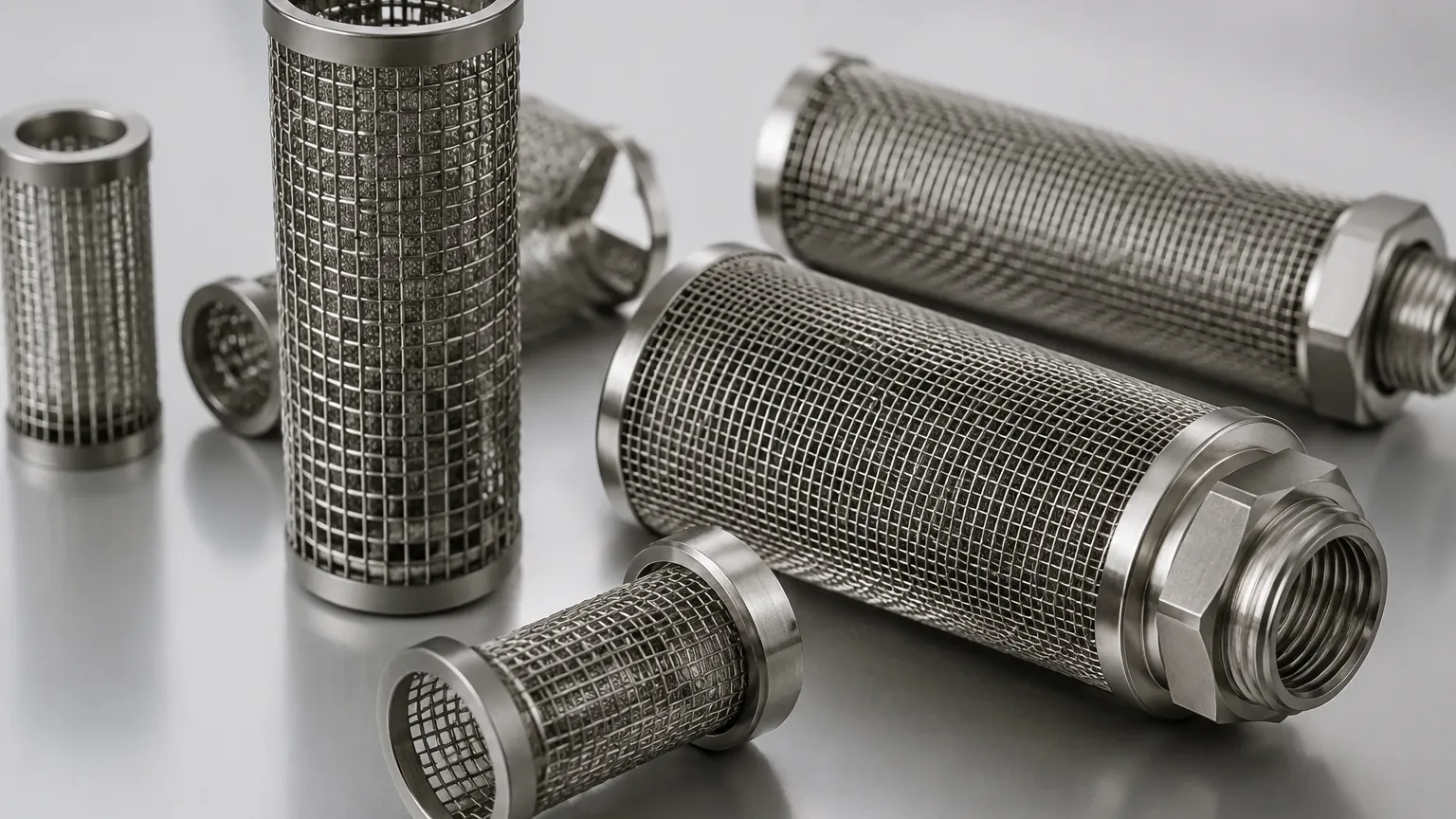
For engineers and procurement specialists, selecting the correct filtration media involves a balance between effective particle capture and the maintenance of adequate flow. Choosing high-quality Wire Mesh Filter Cylinders & Tubes ensures that the system maintains its hydraulic integrity while minimizing the risk of pump cavitation—a common and costly result of improper suction-side design.
The Operating Principles of Suction-Side Filtration
The fundamental goal of a wire mesh suction filter is to remove large suspended solids from a fluid stream before it enters a pump. In hydraulic systems, chemical processing plants, and water treatment facilities, these filters are often submerged directly in a reservoir or installed in-line on the suction pipe.
Pressure Differential and Flow Dynamics
Every filter introduces a degree of resistance to the flow, known as pressure drop ($ΔP$). In a suction application, the pump relies on atmospheric pressure or a slight head pressure to push fluid through the filter. If the wire mesh is too fine or becomes clogged, the resistance increases, causing the pressure at the pump inlet to drop below the fluid's vapor pressure. This leads to cavitation—the formation and subsequent collapse of vapor bubbles—which can erode pump impellers and housings within hours.
Surface vs. Depth Filtration
Wire mesh filters primarily utilize surface filtration. Particles larger than the mesh openings are trapped on the upstream side of the wire cloth. This characteristic makes them particularly suitable for suction applications because they are easier to clean and have a predictable flow resistance compared to depth media like fiberglass or paper, which can collapse under vacuum pressure if not properly supported.
Engineering Criteria for Selecting Wire Mesh Suction Filters
Selecting a wire mesh suction filter is not merely a matter of matching pipe sizes. Several technical variables must be calculated to ensure long-term reliability.
1. Micron Rating and Mesh Count
In suction applications, the micron rating is typically much coarser than in return-line or pressure-line filtration. Common ratings for suction strainers range from 74 microns (200 mesh) to 150 microns (100 mesh). The objective is to protect the pump from "pump-destroying" debris rather than achieving high-purity fluid. Engineers must specify whether they require a nominal rating (where most particles of a certain size are stopped) or an absolute rating (where 99% or more are stopped).
2. Flow Rate and Viscosity
The fluid's viscosity significantly impacts the pressure drop across the filter. For example, a filter designed for water will behave very differently when used with high-viscosity hydraulic oil or chemical resins. As viscosity increases, the allowable flow rate through a given surface area of mesh decreases. To compensate, engineers often specify larger Wire Mesh Filter Cylinders & Tubes to increase the total open area and reduce the velocity of the fluid passing through the mesh.
3. Net Positive Suction Head (NPSH)
The Net Positive Suction Head Required (NPSHr) by the pump must always be lower than the Net Positive Suction Head Available (NPSHa) in the system. The suction filter contributes to the "loss" side of the NPSHa equation. A well-engineered wire mesh filter should ideally contribute no more than 0.05 to 0.1 bar (0.7 to 1.5 psi) of pressure drop when clean and at operating temperature.
Material Selection and Structural Integrity
Industrial environments demand materials that can withstand chemical corrosion, thermal fluctuations, and mechanical stress. Stainless steel is the industry standard for high-performance suction filters.
Stainless Steel Grades
* SS304: Suitable for general industrial applications, water treatment, and non-corrosive oils. It offers excellent mechanical strength and cost-effectiveness.
* SS316/316L: The preferred choice for chemical processing, pharmaceutical, and marine environments. The addition of molybdenum provides superior resistance to chlorides and pitting corrosion.
* Specialty Alloys: For highly aggressive environments, alloys such as Monel or Hastelloy may be used in the construction of the wire mesh.
Weave Types and Performance
The way the wires are woven affects both the filtration accuracy and the structural rigidity of the filter:
* Plain Weave: The most common and economical, offering a straight-through flow path and easy cleaning.
* Dutch Weave: Uses different wire diameters in the warp and shute to create a more robust, dense mesh. This is often used when high mechanical strength and finer filtration are required simultaneously.
* Twilled Weave: Allows for thicker wires in a given mesh count, increasing the durability of the filter cylinder.
Structural Reinforcement
Because suction filters are subject to vacuum forces, the mesh itself often requires support. Custom Wire Mesh Filter Cylinders & Tubes frequently incorporate a perforated metal inner core. This core prevents the mesh from collapsing inward toward the pump inlet during high-flow or high-viscosity events.
Installation Constraints and Best Practices
Proper installation is as critical as the filter design itself. A poorly placed wire mesh suction filter can lead to air ingestion or uneven flow distribution.
Submerged Suction Strainers
When installed in a reservoir, the filter should be positioned at a depth that prevents the formation of a vortex, which can draw air into the pump. However, it must also be high enough above the bottom of the tank to avoid drawing in settled sludge and heavy contaminants. A common rule of thumb is to place the filter at least 1.5 to 2 times its diameter away from the reservoir floor and walls.
In-Line Suction Filters
For in-line configurations, the housing must be designed for easy access. Since suction filters are the first components to clog in a contaminated system, they require regular inspection. Many modern systems include a vacuum gauge or a differential pressure indicator that alerts maintenance teams when the filter element requires cleaning.
Avoiding Air Leaks
Any connection on the suction side must be perfectly airtight. Even a microscopic leak can allow air to be sucked into the fluid stream, leading to pump noise, erratic pressure, and accelerated fluid oxidation. Using high-quality threaded or flanged connections on the filter assembly is essential.
Maintenance and Total Cost of Ownership (TCO)
One of the primary advantages of a stainless steel wire mesh suction filter is its cleanability. Unlike disposable synthetic filters, stainless steel elements can be cleaned and reused multiple times, significantly reducing the total cost of ownership.
Cleaning Procedures
Depending on the contaminant, wire mesh filters can be cleaned using:
* Ultrasonic Cleaning: The most effective method for removing fine particles lodged within the mesh openings.
* Backwashing: Using a clean fluid or air to blow contaminants off the surface of the mesh.
* Chemical Soaking: Useful for removing organic buildup or scale, provided the chemical agent is compatible with the stainless steel grade.
Replacement Cycles
While cleanable, wire mesh elements do have a finite lifespan. Repeated cleaning and mechanical stress can eventually lead to "wire fraying" or the breakdown of the mesh-to-end-cap bonds. Regular inspection should look for signs of bypass—areas where the mesh has pulled away from the support structure—which would allow unfiltered fluid to reach the pump.
Customization and OEM Solutions
Standard off-the-shelf filters often fall short in specialized industrial equipment. Custom manufacturing allows for the optimization of the filter's geometry to fit tight spatial constraints or to meet specific hydraulic requirements.
Kaifil specializes in the production of tailored Wire Mesh Filter Cylinders & Tubes, offering a range of customization options including:
* Custom End Caps: Threaded, flanged, or slip-on designs in various materials.
* Variable Lengths and Diameters: Ensuring the maximum possible surface area within the available envelope.
* Multi-Layer Construction: Combining different mesh counts to provide both fine filtration and high mechanical strength.
* Integrated Bypass Valves: Some suction filters include an internal bypass valve that opens if the filter becomes completely blocked, allowing the pump to continue receiving fluid (albeit unfiltered) to prevent immediate catastrophic pump failure.
Conclusion: Making Informed Procurement Decisions
For engineers and purchasing managers, the selection of a wire mesh suction filter should be driven by technical data and application-specific requirements. A filter that is too fine will cause pump failure through cavitation, while a filter that is too coarse or poorly constructed will allow damaging debris to pass through.
By focusing on high-quality materials like 316L stainless steel and ensuring the structural integrity of Wire Mesh Filter Cylinders & Tubes, facilities can extend the service life of their pumps and reduce unplanned downtime. When evaluating suppliers, it is essential to confirm their ability to provide precise micron ratings, robust structural supports, and the engineering expertise necessary to match the filter to the system's specific flow and viscosity profiles. A well-designed suction filter is not just a component; it is an insurance policy for the heart of your industrial fluid system.
